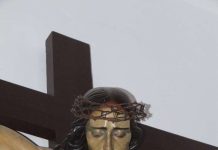
Badajoz immerses itself every year in a unique experience that combines spirituality, historical past, artistic expressions and moving sobriety: Holy Week. This event has been recognized with the prestigious title of “Festival of National Tourist Interest” since 2011, highlighting its splendor that goes beyond the religious, embracing the rich history, exceptional art, palpable devotion and deep-rooted traditions in the city. .
With roots dating back to the 16th century, Holy Week in Badajoz has witnessed the passage of more than forty brotherhoods over the years. Today, eleven of them, each with their own unique history, parade displaying monuments and works of art through the charming corners of the old town. This artistic parade is possible thanks to the silent efforts of the costaleros, who responsibly carry the processional steps.
The celebration begins on Friday of Sorrows and ends on Easter Sunday. Each day is distinguished by unique and emotional processions, with Holy Thursday being the most notable, with the departure of the Patroness, the Virgin of Soledad.
Over the centuries, Badajoz has experienced significant historical changes that have unfortunately resulted in the loss of numerous religious documents. This has generated uncertainty about the historical data of the oldest brotherhoods, especially those before the 16th century.
The first brotherhood about which there is enough information for an adequate study is the Brotherhood and Brotherhood of Nuestra Señora de la Concepción, founded in 1344 in the Church of San Andrés. Preserved documents reveal norms of action and behavior for the brothers, being a pioneer in Spain by emphatically celebrating the festival of Our Lady of the Conception. Although the purpose of this brotherhood is not known with certainty, documents from the 17th century mention a congregation with this name.
The 16th century marked the emergence of new brotherhoods, such as that of Santa María, based in the Church of Santa María del Castillo. The Brotherhood of San Nicolás was also founded, characterized by its religious exaltation and its noble charitable objectives, such as the creation of a hospital for the poor and sick.
Over the centuries, various brotherhoods have continued the religious legacy in Badajoz, exceeding 40 groups that have contributed to forging an Holy Week rich in art and stories that are both religious and fundamental to the history of the city.