
Holy Week in Badajoz unfolds like a fascinating mosaic that fuses spirituality, history, artistic expressions, vibrant colors and a touch of austerity, achieving the prestigious title of “Festival of National Tourist Interest” in 2011.
The deep-rooted tradition of the Semana Mayor of Badajoz dates back to the 16th century, witnessing more than forty brotherhoods that have paraded through its streets over the years. Today, eleven of these brotherhoods, each with its own narrative, display monuments and works of art in the most picturesque corners of the old town. This artistic display is possible thanks to the dedicated work of the costaleros, who assume the responsibility of carrying the processional steps.
The celebration begins on Friday of Sorrows and culminates on Easter Sunday, with each day marked by unique and emotional processions, Holy Thursday being the most significant with the departure of the Patroness, the Virgin of Soledad.
Holy Week in Badajoz not only represents a religious event, but also a living testimony of the rich history, exceptional art, palpable devotion and deep-rooted traditions that define the city’s identity.
Dating back to the 13th century, after the reconquest of the city by Alfonso IX of León, Badajoz made its first division by parishes. In this context, the Church of San Andrés emerges, occupying the current land of the Plaza de Cervantes. Although suppressed as a parish in the 17th century, the building was restored in the 18th century and finally demolished in 1834. In 1842, the parish of San Andrés found its new home in the church of the disentailed Convento de Descalzas de San Francisco “Madre de Dios de Valverde”, built in 1548.
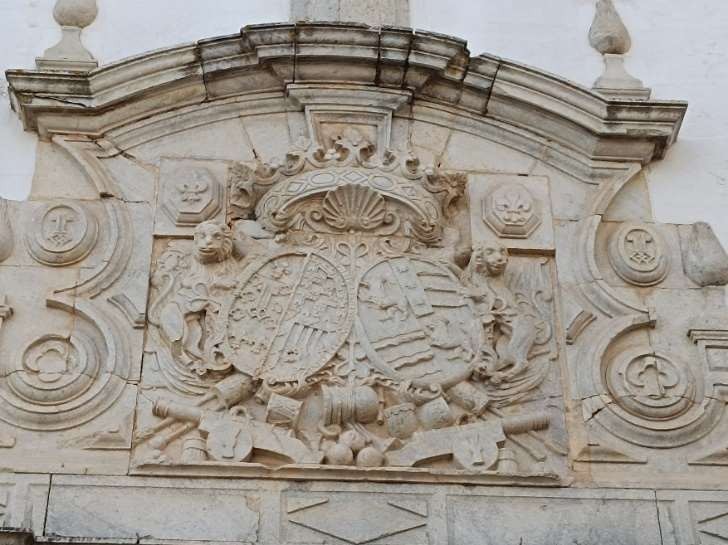
This temple, subjected to various renovations, preserves the original portals of the convent church. Those who attend the exit of the Brotherhood of the Descent will be able to admire two magnificent baroque doors from the 18th century with classicist elements, one of them adorned with the Quirós shield and a niche with a sculpture of Saint Peter, while the other highlights the weapons of the Marquis of Monreal, Patron of the Convent. The exit door of the brotherhood, built specifically for the procession, is flanked by the shields of the Brotherhood and Bishop D. José María Alcaraz y Alenda, culminating with a sculpture of San Andrés.


